The Octave
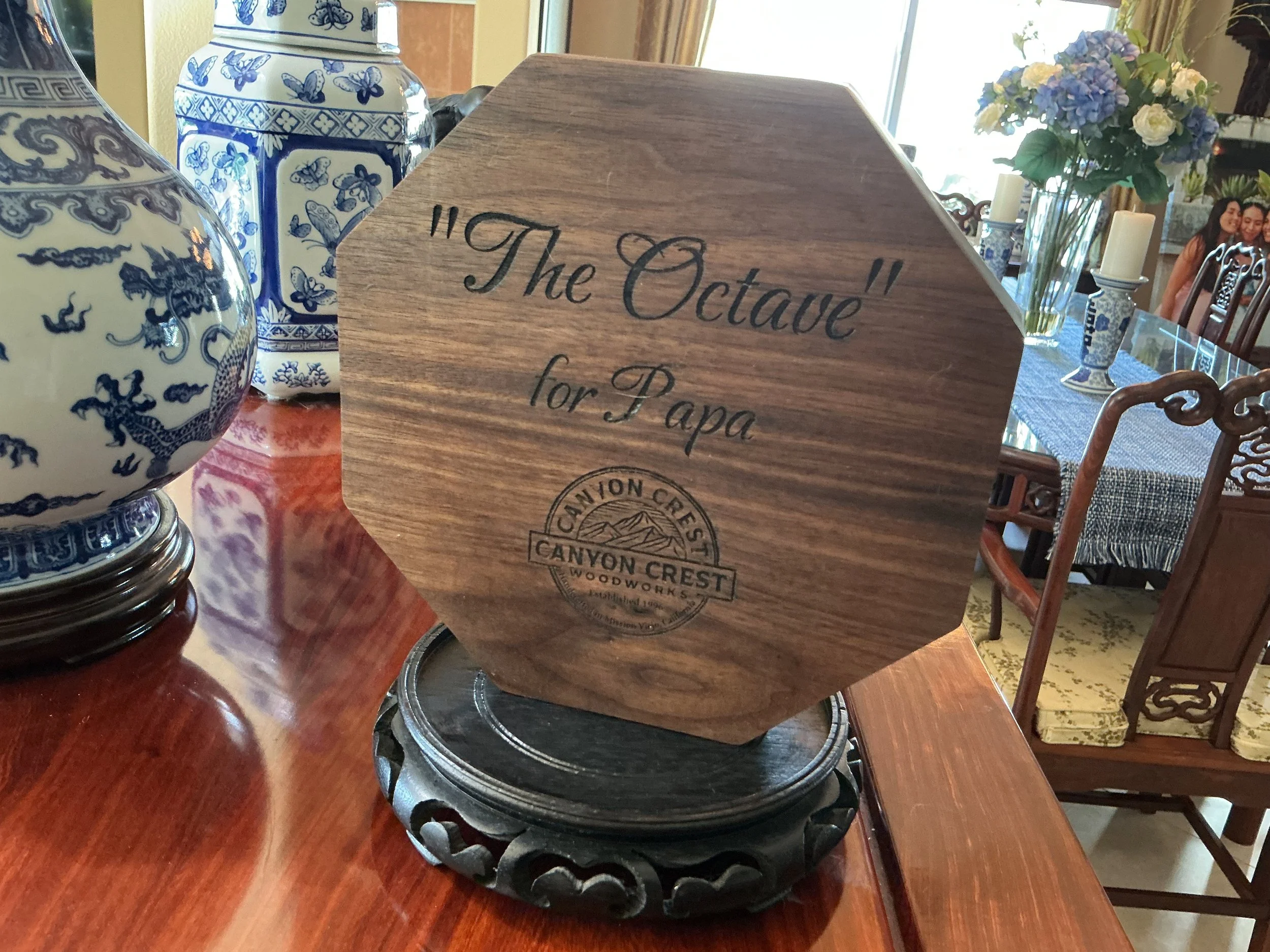
The Octave — 8" Walnut Cigar Ashtray
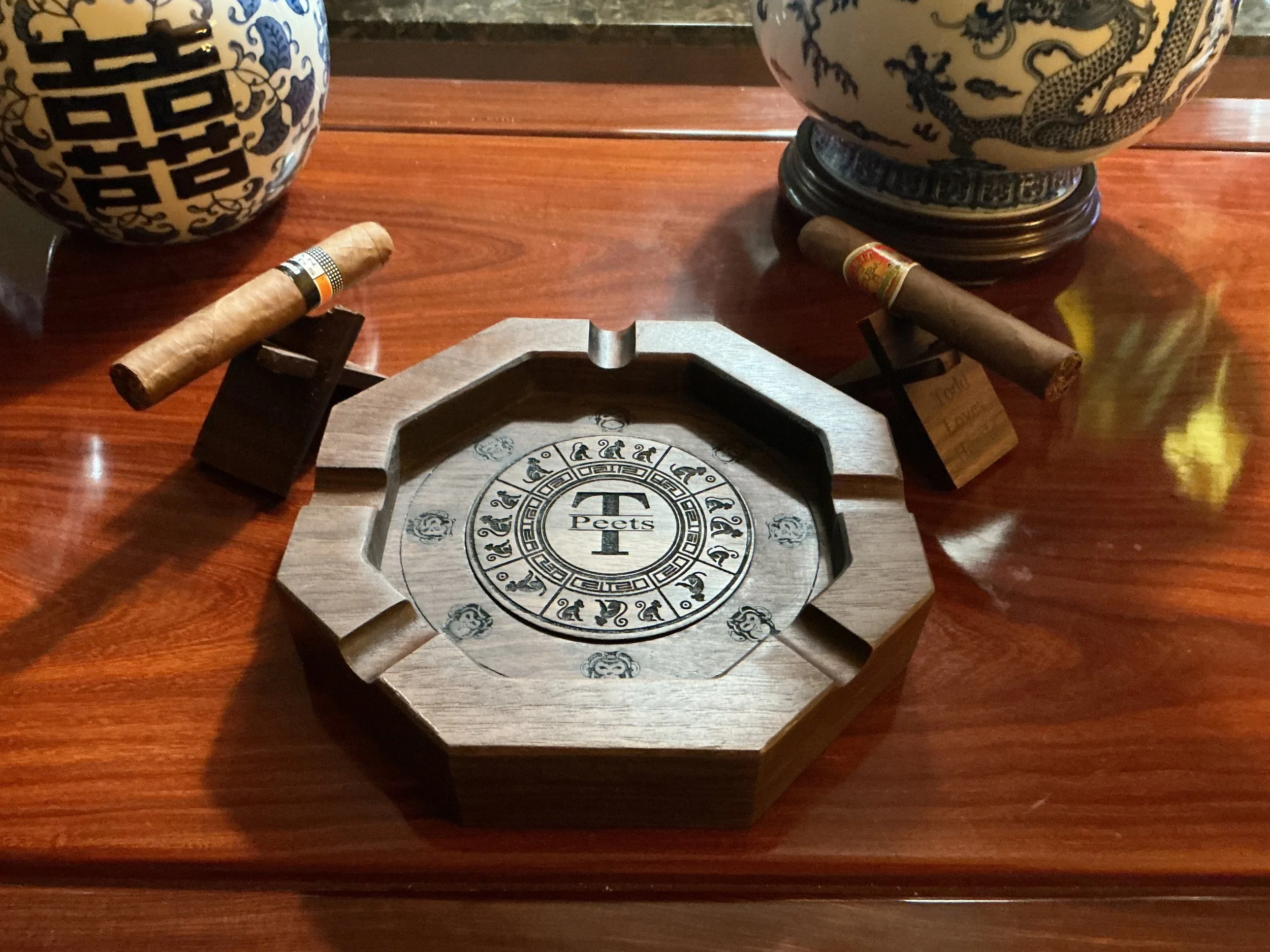
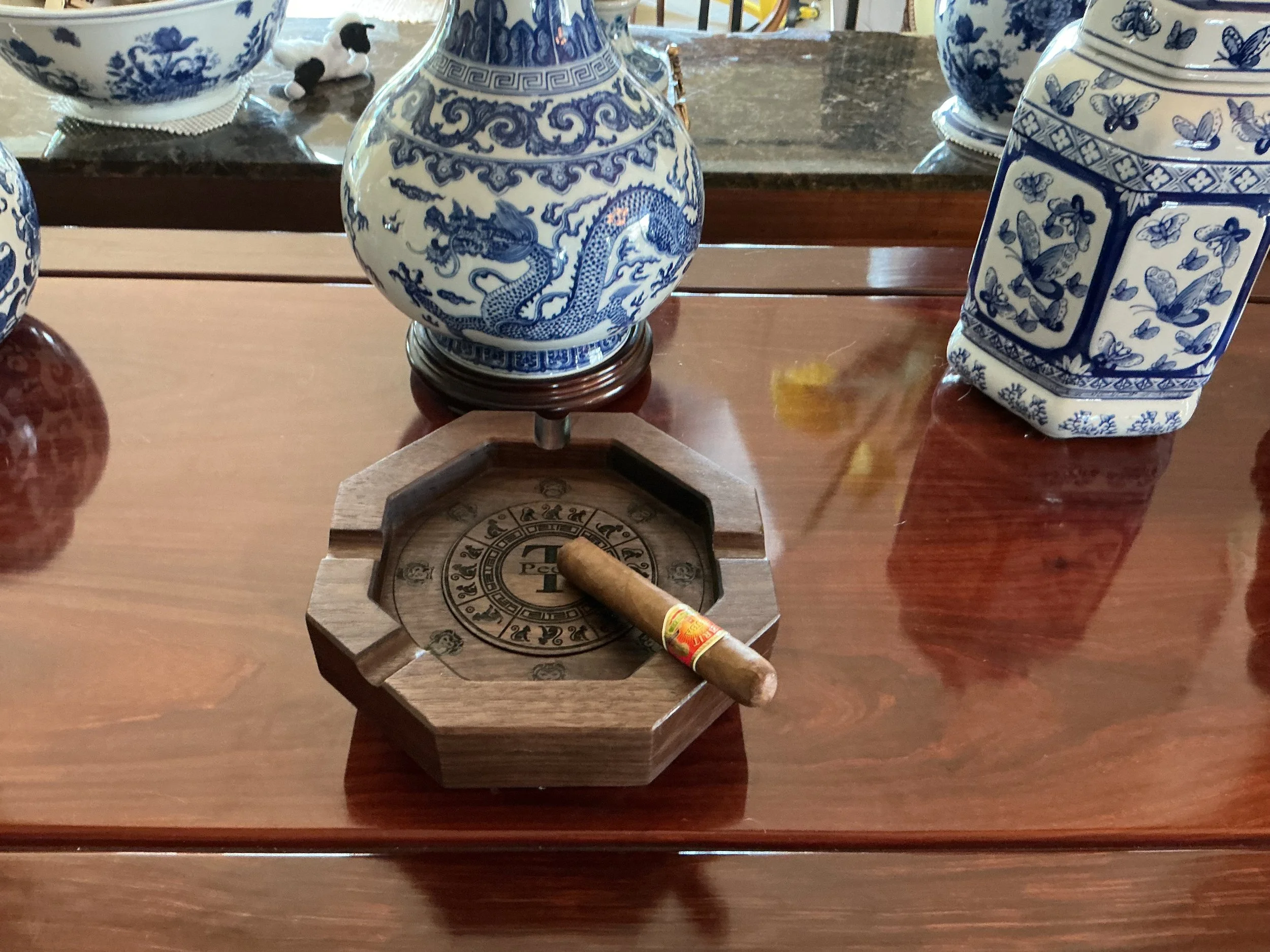
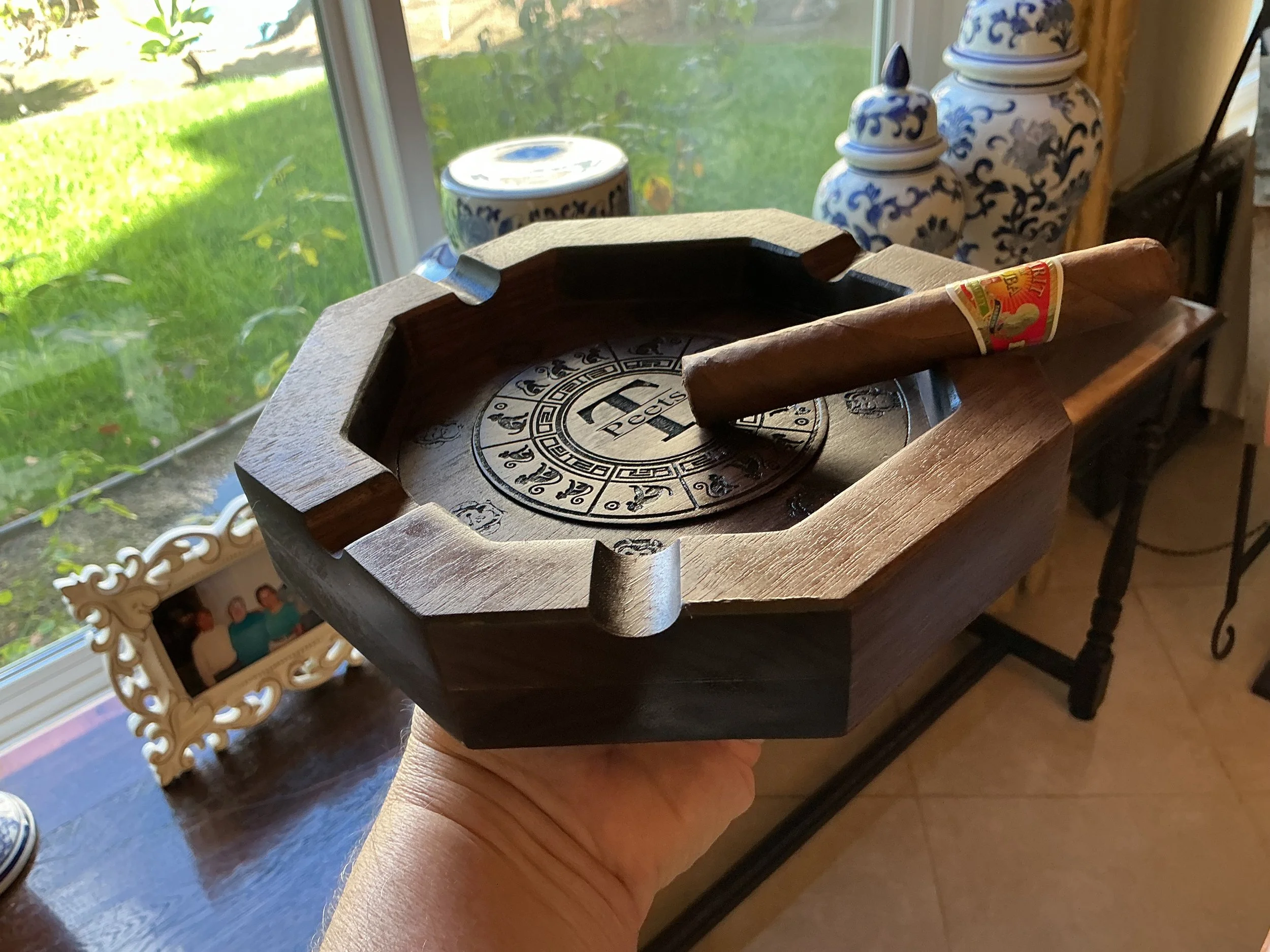
Picture a perfectly proportioned octagon carved from solid American black walnut, about 8 inches across from flat side to flat side. Not oversized, not decorative clutter. Just clean geometry and good material doing the talking.
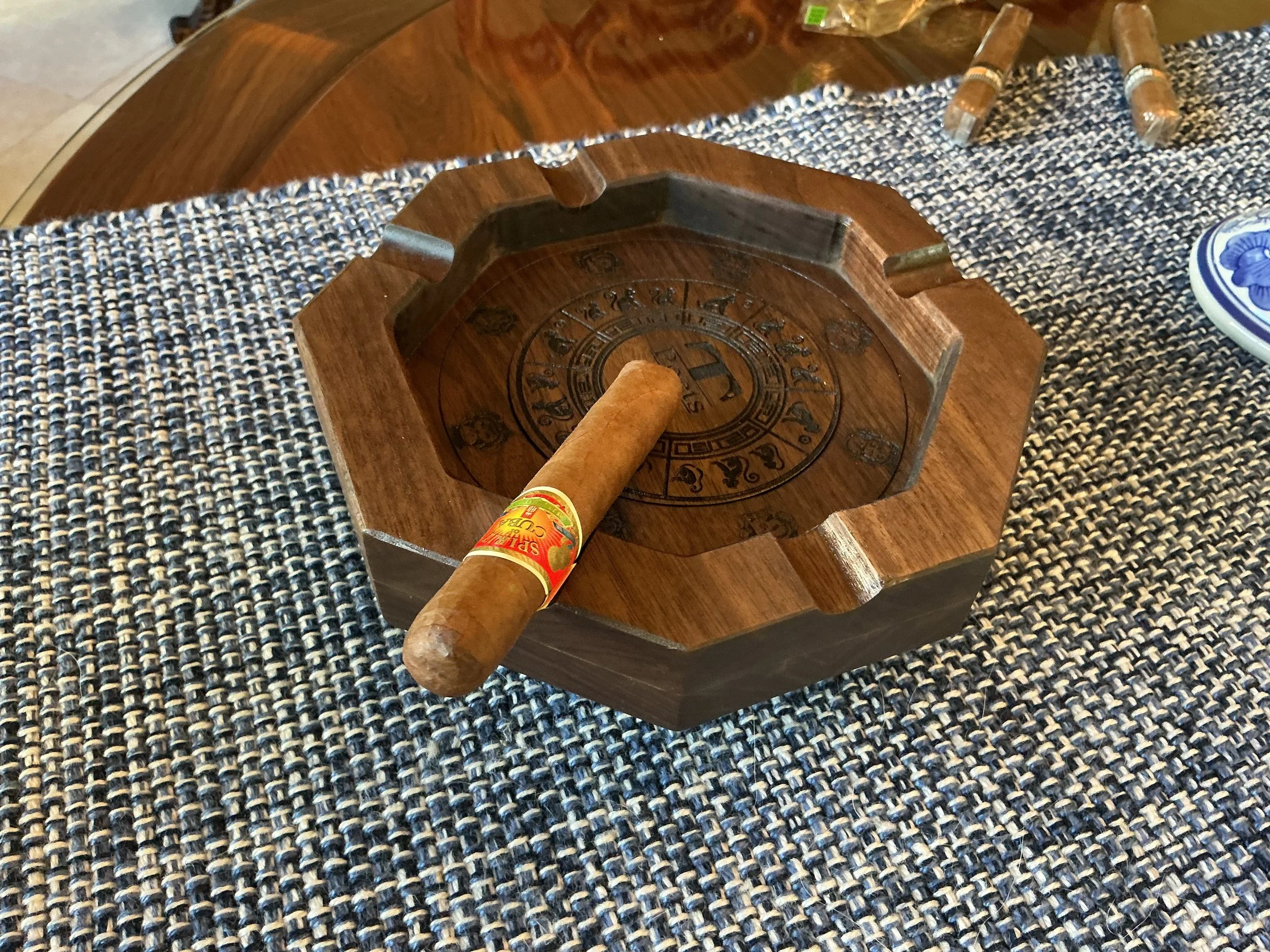
The body is cut from a single thick walnut blank, typically around 1.25–1.5 inches thick, giving it a low, solid stance on the table. When you pick it up it feels like a dense object, not some lightweight novelty ashtray that blows away if someone sneezes.
Form
The octagon shape is the defining feature.
Eight equal sides create a quiet symmetry that feels deliberate but not flashy. Each face subtly invites a different viewing angle, so the piece reads differently as you rotate it on a table.
The geometry does the aesthetic work. No gimmicks required.
Center Field
At the center sits a recessed circular bowl, usually around 4 inches in diameter.
That cavity is deep enough to function as the ash receptacle but shallow enough that the surface still reads like a medallion when empty. Depending on the version, that center field can be:
• bare walnut
• a slate insert
• engraved mural work
• a simple burnished recess
But the structure of the piece stays the same.
Cigar Rests
The edges of the octagon create natural placement for cigar rests. These are typically carved as subtle scalloped notches rather than aggressive grooves.
Most Octave builds use two or four rests, depending on whether the piece is meant for a personal desk or a small group setting.
They’re cut deep enough to hold a cigar securely but shallow enough that they don’t destroy the clean outline of the form.
Surface & Finish
The walnut surface is usually finished with a hand-rubbed oil or hard wax oil.
That brings out the grain in the wood so the piece has a quiet glow instead of a glossy furniture-store shine. Walnut tends to develop deep chocolate tones with subtle gold streaks once it’s finished properly.
Over time it darkens slightly and gets better looking. Wood does that if you leave it alone long enough.
Character
What makes the Octave work is that it’s disciplined.
No brass cleats.
No bullet casings.
No nautical theatrics.
Just geometry, walnut, and proportion.
It’s the kind of piece that sits on a desk, a poker table, or a quiet cigar room and doesn’t scream for attention, but anyone who knows wood immediately notices it.
The Octave is essentially the foundation piece of the Canyon Crest language:
material first
form second
decoration last.
The Octave — 8" Walnut Cigar Ashtray
Picture a perfectly proportioned octagon carved from solid American black walnut, about 8 inches across from flat side to flat side. Not oversized, not decorative clutter. Just clean geometry and good material doing the talking.
The body is cut from a single thick walnut blank, typically around 1.25–1.5 inches thick, giving it a low, solid stance on the table. When you pick it up it feels like a dense object, not some lightweight novelty ashtray that blows away if someone sneezes.
Form
The octagon shape is the defining feature.
Eight equal sides create a quiet symmetry that feels deliberate but not flashy. Each face subtly invites a different viewing angle, so the piece reads differently as you rotate it on a table.
The geometry does the aesthetic work. No gimmicks required.
Center Field
At the center sits a recessed circular bowl, usually around 4 inches in diameter.
That cavity is deep enough to function as the ash receptacle but shallow enough that the surface still reads like a medallion when empty. Depending on the version, that center field can be:
• bare walnut
• a slate insert
• engraved mural work
• a simple burnished recess
But the structure of the piece stays the same.
Cigar Rests
The edges of the octagon create natural placement for cigar rests. These are typically carved as subtle scalloped notches rather than aggressive grooves.
Most Octave builds use two or four rests, depending on whether the piece is meant for a personal desk or a small group setting.
They’re cut deep enough to hold a cigar securely but shallow enough that they don’t destroy the clean outline of the form.
Surface & Finish
The walnut surface is usually finished with a hand-rubbed oil or hard wax oil.
That brings out the grain in the wood so the piece has a quiet glow instead of a glossy furniture-store shine. Walnut tends to develop deep chocolate tones with subtle gold streaks once it’s finished properly.
Over time it darkens slightly and gets better looking. Wood does that if you leave it alone long enough.
Character
What makes the Octave work is that it’s disciplined.
No brass cleats.
No bullet casings.
No nautical theatrics.
Just geometry, walnut, and proportion.
It’s the kind of piece that sits on a desk, a poker table, or a quiet cigar room and doesn’t scream for attention, but anyone who knows wood immediately notices it.
The Octave is essentially the foundation piece of the Canyon Crest language:
material first
form second
decoration last.